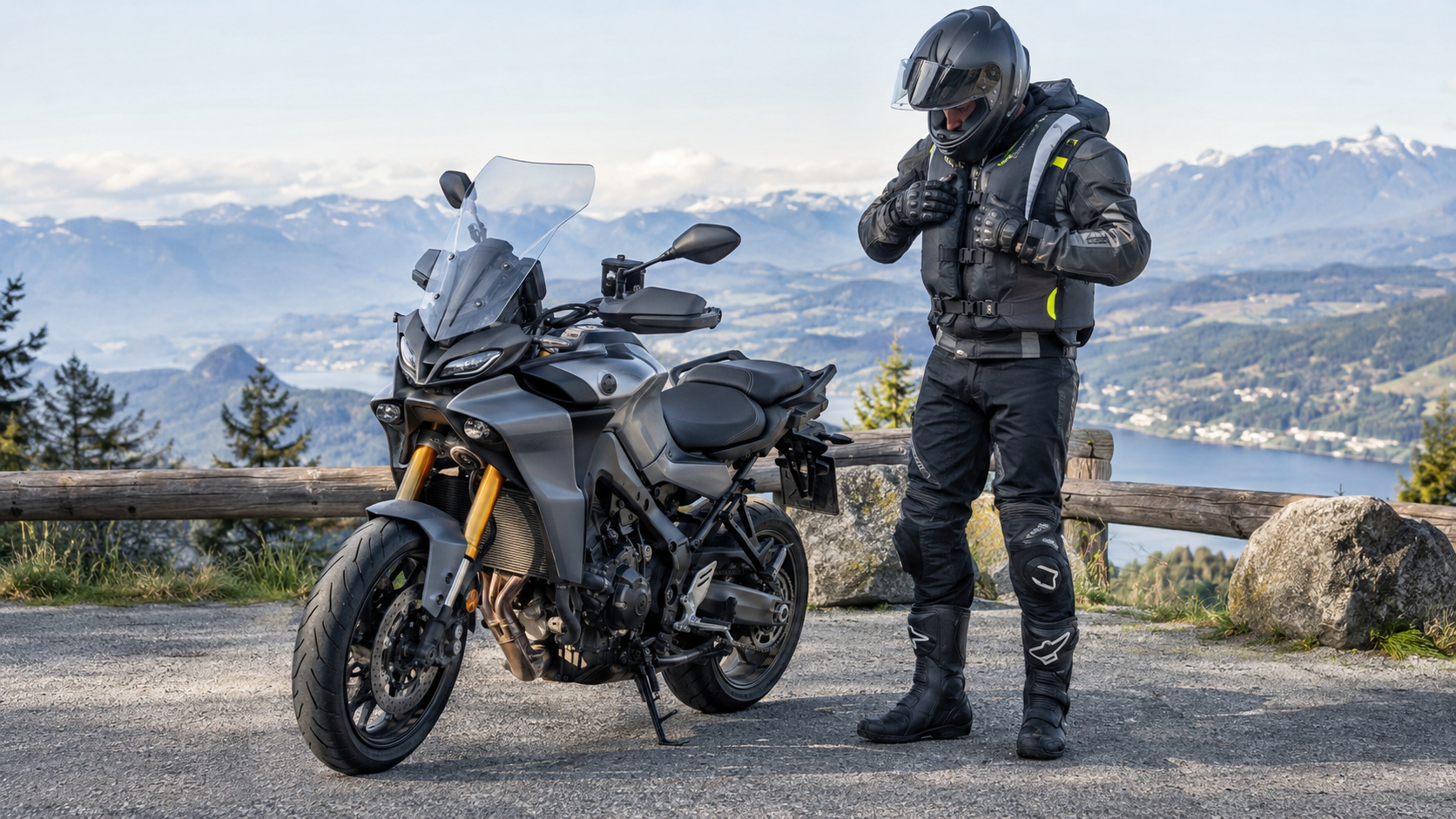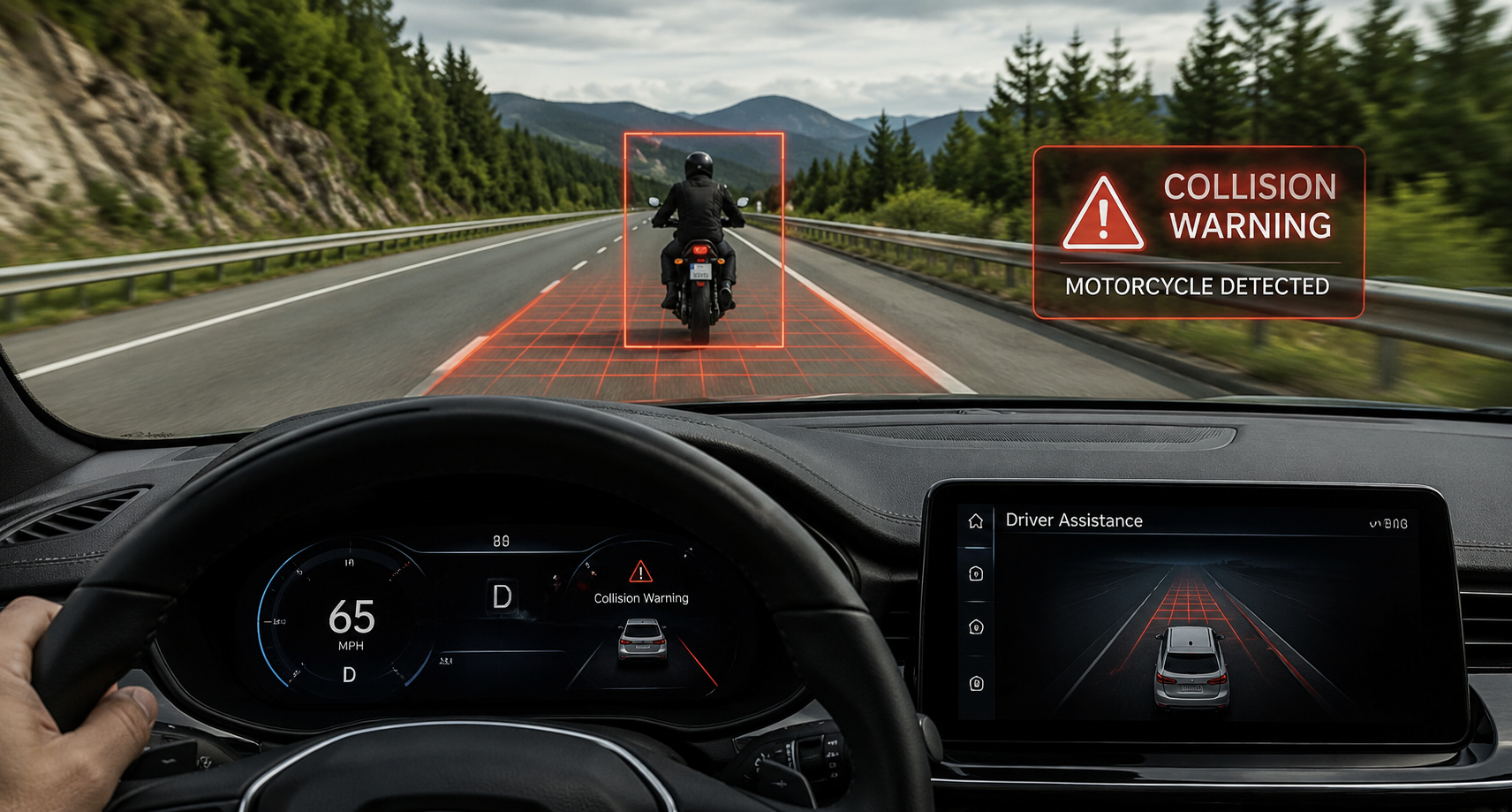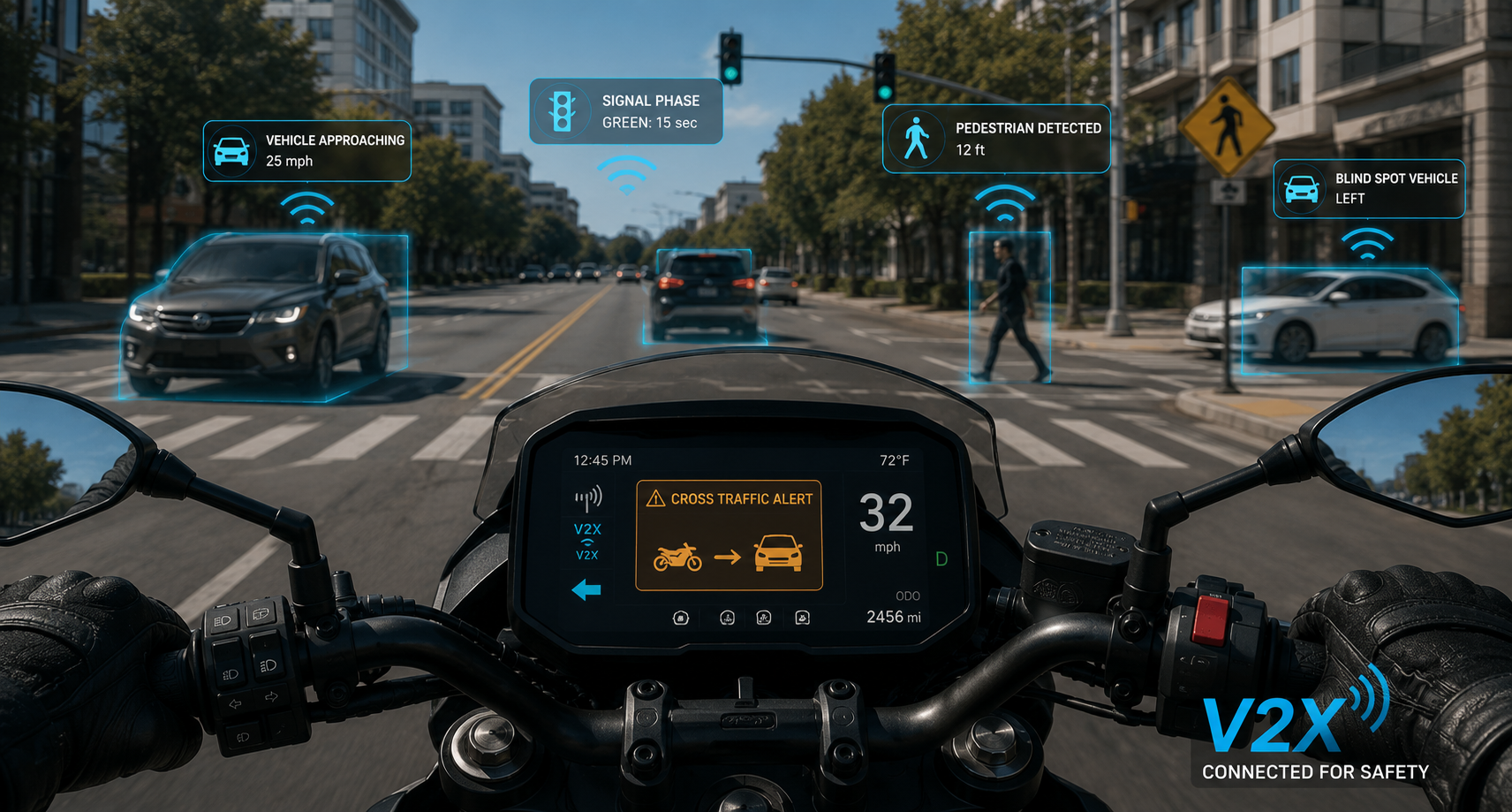
Connected motorcycle technology is rapidly transforming rider safety in 2026. From Vehicle‑to‑Everything (V2X) communication to AI‑enhanced hazard warnings, modern motorcycles are increasingly able to “talk” to the world around them — other vehicles, infrastructure, and safety systems — creating a richer, more reactive safety network. This evolution in connectivity is not only innovative but lifesaving in ways that traditional safety systems alone cannot achieve.
What Is Smart Motorcycle Connectivity?
Smart motorcycle connectivity refers to the suite of technologies that allows a motorcycle to communicate with external systems. These include:
- Vehicle‑to‑Vehicle (V2V) communication — exchanging safety information with cars and other motorcycles
- Vehicle‑to‑Infrastructure (V2I) — linking with road sensors, traffic signals, and roadside warning systems
- Vehicle‑to‑Cloud (V2C) — uploading and receiving safety updates or traffic data
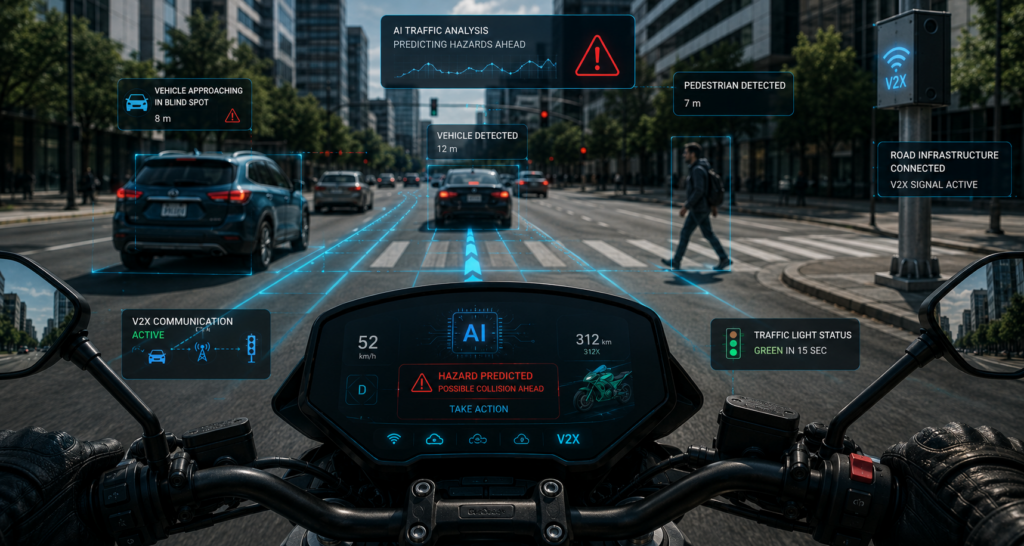
- AI hazard detection — real‑time alerts based on sensor data and pattern recognition
These technologies do more than enhance convenience — they directly impact rider awareness and accident avoidance.
Why Connectivity Matters for Motorcycle Safety
Unlike cars, motorcycles offer little in the way of physical crash protection. According to safety data studies, motorcyclists face a significantly higher fatality risk per mile than cars. Connectivity helps mitigate hidden risks by anticipating hazards before they happen.
Traditional motorcycle safety systems — such as anti‑lock braking systems (ABS) and stability control — react during a dangerous situation. In contrast, smart connectivity aims to warn riders before a hazard becomes critical.
For example:
- Automatic warnings when a vehicle ahead suddenly decelerates
- Real‑time alerts about changes in speed limits or hazardous curves
- Signals from smart infrastructure indicating red light timing or lane closures
These alerts work at the millisecond level and can significantly reduce reaction time, giving riders a better chance to avoid a crash.
The Role of V2X (Vehicle‑to‑Everything) Technology
V2X technology is a cornerstone of connected road safety. It enables motorcycles to communicate with other vehicles (V2V), infrastructure (V2I), and even pedestrians (V2P) using wireless signals. The technology is similar to systems being rolled out for connected cars but adapted for motorcycles’ unique dynamics.
With V2X, motorcycles could:
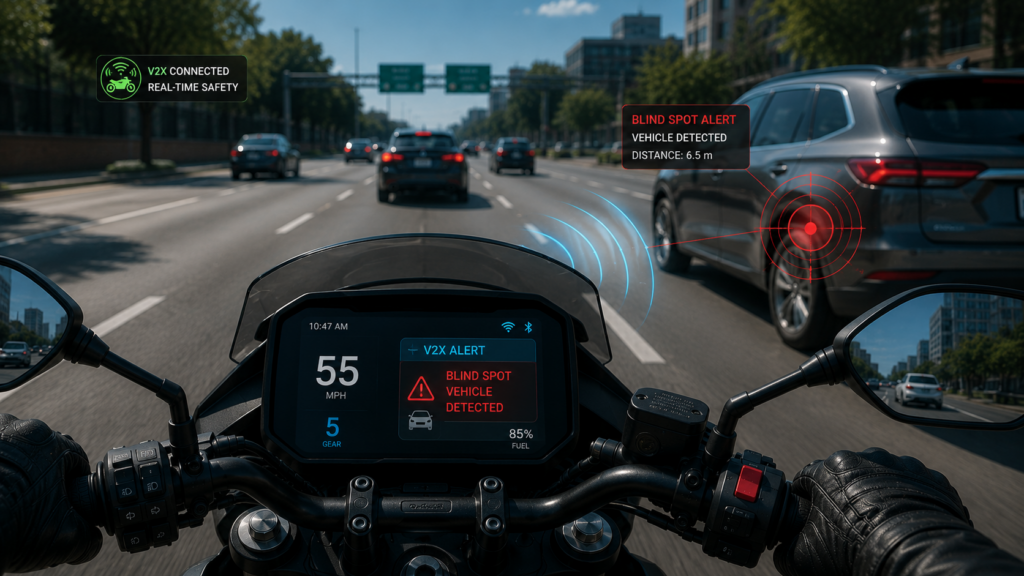
- Receive notifications about a vehicle entering their blind spot
- Know about upcoming hazards like stationary vehicles or sudden traffic jams
- Share their position with other road users to increase visibility
Industry analysts predict that connected motorcycle tech will become mainstream as 5G coverage improves and sensor costs continue to fall.
Integrating V2X With Rider Safety Systems
Connectivity works best when integrated with other safety systems already discussed in your site’s articles, such as:
- Advanced Rider Assistance Systems (ARAS) — automatic hazard detection and braking support
- Motorcycle Technology — innovations like ABS, traction control, and sensors
- Motorcycle Innovations — new tech trends for improved rider safety
When combined, these systems create a responsive safety ecosystem. For instance, V2X can signal a hazardous intersection ahead, and ARAS can automatically adjust braking force to prevent loss of control.
Real‑World Crash Prevention Benefits
Several trends show how connectivity can reduce motorcycle crashes:
- Blind spot warnings reduce right‑hook and merging collisions, a common crash type documented in motorcycle safety research.
- Traffic signal timing alerts help riders avoid sudden stops or rear‑end collisions
- Lane change notifications minimize swerving accidents on highways
- Intersection warnings address one of the most dangerous riding situations
Proactive alerts — where a rider is warned before danger becomes visible — are a game changer. Research into AI and connected systems shows that machine learning and sensors can detect crash patterns and signal riders before a human can react.
Challenges and Adoption Barriers
Despite its potential, widespread adoption of connected systems among motorcycles faces challenges:
- Cost: Advanced sensors and connectivity modules add price to motorcycles.
- Compatibility: Older bikes may not support retrofitted connectivity tech.
- Network gaps: Rural areas with weak 5G or LTE signals may limit real‑time crash alerts.
Many riders also worry about data privacy and the reliance on digital systems. However, as the technology matures and standards evolve, these concerns are gradually being addressed.
Policy and Infrastructure Support
Government and safety organizations are increasingly recognizing the role of connected tech in reducing motorcycle fatalities. Similar safety campaigns — like the “Share the Road” initiatives promoted by state transportation departments — emphasize awareness and structural road safety improvements.
Moreover, global traffic safety bodies are exploring how connected systems can be integrated into broader road design and vehicle safety regulations.
Future Outlook: AI and Predictive Safety
Looking ahead, connected motorcycles will not only communicate status and warnings — they will predict dangerous scenarios. AI can analyze traffic flow, rider behavior, and historical crash data to forecast risk zones before a rider approaches them. This kind of predictive hazard awareness could substantially lower crash rates further.
Research in this area is already underway, combining physiological monitoring and accident detection systems to automatically notify emergency services if a crash occurs.
Conclusion
Smart motorcycle connectivity — including V2X communication and AI hazard systems — represents a major leap forward in rider safety. By enabling motorcycles to communicate with other vehicles, roadside infrastructure, and safety networks in real time, these technologies create a safer, smarter riding environment that can help prevent accidents before they happen.
As connectivity becomes more accessible and integrated with existing safety systems, riders stand to benefit from a new era of proactive crash prevention and enhanced situational awareness.
For related topics, check out more on Motorcycle Safety, Accident Prevention, and Motorcycle Trends.
External Resources: