Motorcycle lane filtering vs. lane splitting has become an increasingly important road safety discussion in 2026. As more states consider allowing motorcycles to move between vehicles in traffic, researchers are examining whether these practices can reduce crashes or introduce additional risks.
The debate gained renewed attention in July 2026 when the Governors Highway Safety Association (GHSA) announced a research initiative examining motorcycle lane filtering, traffic flow, and safety outcomes. The project aims to address gaps in American crash research and help states develop evidence-based motorcycle safety policies.
Understanding the differences between lane filtering and lane splitting matters for riders, drivers, and transportation officials. Both practices involve motorcycles traveling between vehicles, but their legal definitions, permitted speeds, and potential hazards can differ significantly.
This guide examines current motorcycle lane filtering research, crash risks, state regulations, and practical considerations for safer riding.
What Is Motorcycle Lane Filtering?
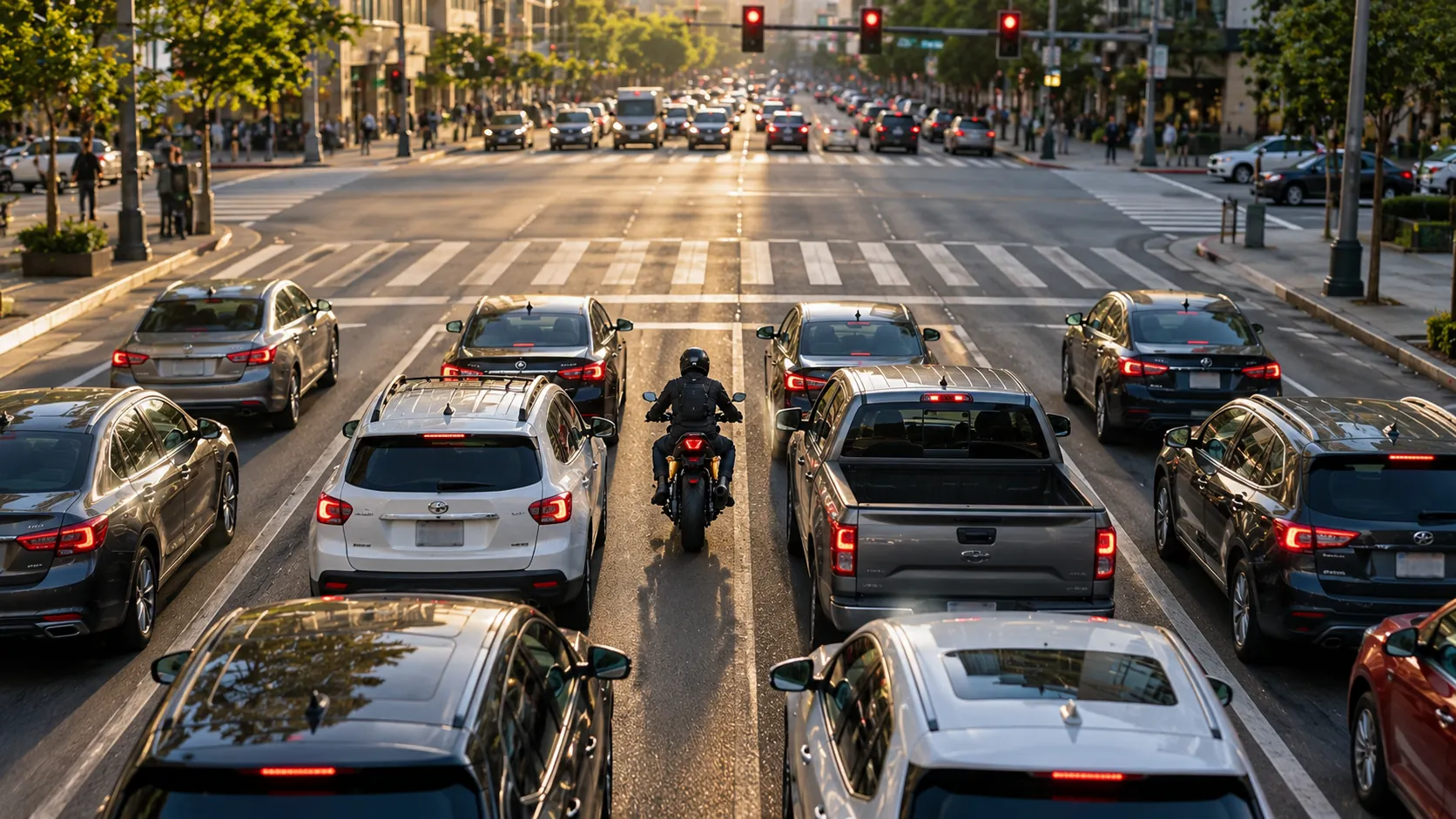
Motorcycle lane filtering generally describes a rider moving between lanes of stopped traffic, often to reach the front of a queue at an intersection. The practice is intended to allow motorcycles to reposition themselves while surrounding vehicles remain stationary.
For example, when cars are stopped at a red light, a motorcycle may move slowly between them toward the intersection. In states that permit filtering, specific conditions determine when this maneuver is legal.
Some regulations establish maximum motorcycle speeds, roadway requirements, and restrictions on overtaking moving vehicles.
According to the Utah Department of Public Safety’s lane filtering guidance, filtering is intended partly to reduce the risk of motorcycles being struck from behind while waiting in stopped traffic.
What Is Motorcycle Lane Splitting?
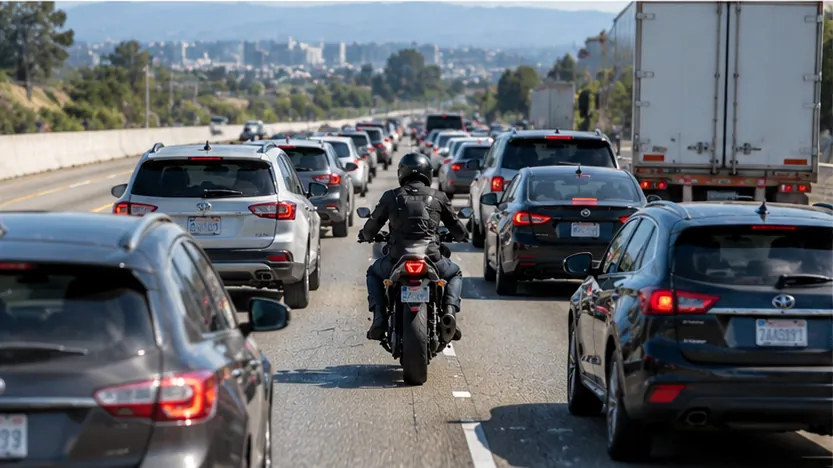
Lane splitting generally refers to riding a motorcycle between rows of vehicles traveling in the same direction. Unlike the narrower definition of lane filtering, lane splitting may involve traffic that is moving slowly rather than completely stopped.
California is the best-known U.S. example of a state permitting motorcycle lane splitting. The California Highway Patrol explains that riders must consider traffic speed, surrounding vehicles, visibility, and available space before traveling between lanes.
Although the terminology sometimes overlaps, filtering and splitting are not interchangeable in every state. Riders should follow the definitions and requirements established by the jurisdiction where they ride.
Why Motorcycle Lane Filtering Is Trending in 2026
In July 2026, the Governors Highway Safety Association announced a research project examining the safety outcomes associated with lane filtering and splitting.
The proposed research seeks to establish consistent definitions, examine existing studies, and develop practical guidance for state highway safety offices, motorcycle training programs, and driver licensing agencies.
GHSA acknowledges that American research remains limited and that findings from other countries may not accurately represent U.S. traffic conditions.
This research is particularly relevant because different states have adopted different approaches. Some allow limited filtering through stopped traffic, while others permit broader lane splitting or prohibit both practices.
The research project should not be mistaken for completed evidence proving that one approach is safer. Its purpose is to help answer questions that existing data have not resolved.
What Does Research Say About Motorcycle Lane Splitting Safety?
One frequently cited American study comes from the University of California, Berkeley. Researchers examined motorcycle crashes reported in California between June 2012 and August 2013, including 997 collisions involving lane-splitting riders.
According to UC Berkeley’s analysis, the speed difference between motorcycles and surrounding traffic was an important predictor of injury severity.
The researchers found that lane splitting was associated with more favorable injury outcomes under certain conditions, particularly when surrounding vehicles traveled at 50 mph or less and the motorcycle’s speed exceeded surrounding traffic by no more than 15 mph.
However, these findings have important limitations. The study examined riders who were already involved in crashes. It did not establish that lane splitting always prevents collisions or that every lane-splitting maneuver is safe.
The findings suggest that relative speed is a critical factor, making cautious riding especially important when traveling between vehicles.
For broader information about motorcycle collision patterns, see our article on motorcycle accident statistics and risk factors.
Potential Safety Benefits of Lane Filtering
Reduced Exposure to Rear-End Collisions
A motorcycle stopped behind another vehicle may be vulnerable if an approaching driver fails to brake in time. Filtering can allow a rider to move away from the direct path of following traffic.
However, whether this produces a measurable reduction in overall crash rates remains an area requiring more research.
Better Positioning at Intersections
Moving toward the front of stopped traffic may provide riders with a clearer view of traffic signals and surrounding vehicles. It may also reduce time spent directly behind larger vehicles.
These potential advantages depend on the roadway layout, available space, traffic movement, and the rider’s ability to complete the maneuver safely.
Reduced Waiting in Congestion
Lane filtering can allow motorcycles to progress through traffic queues without occupying the same amount of space as larger vehicles. Nevertheless, improvements in congestion do not automatically establish improvements in crash safety.
What Are the Biggest Risks?
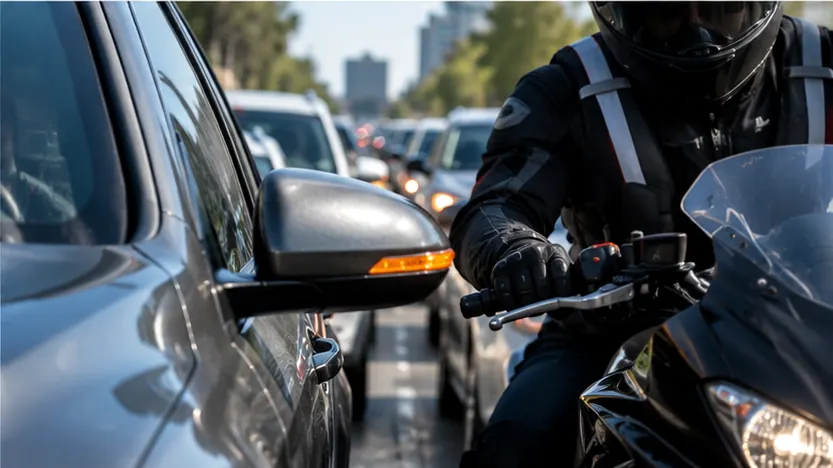
Both lane filtering and lane splitting introduce situations where motorcycles travel close to larger vehicles. Limited clearance leaves less room for errors.
Important hazards include:
- Sudden lane changes: Drivers may move into an adjacent lane without noticing an approaching motorcycle.
- Vehicle doors: Occupants in stopped traffic may open doors unexpectedly.
- Extended mirrors: Wide mirrors on SUVs, trucks, and commercial vehicles can reduce available space.
- Unexpected traffic movement: Drivers may accelerate or turn their wheels as traffic begins moving.
- Road surface hazards: Oil, gravel, pavement markings, and debris can affect traction near lane boundaries.
- Excessive speed differences: A motorcycle traveling substantially faster than nearby vehicles leaves less time to respond.
These risks reinforce the importance of defensive riding. Our guide to the top causes of motorcycle accidents in 2026 discusses additional collision factors, including distracted driving, speeding, and poor road conditions.
Motorcycle Lane Filtering Laws in 2026
Motorcycle filtering laws are not uniform across the United States. Several states illustrate how differently the practice is regulated.
California
California permits motorcycle lane splitting when performed safely and prudently. Riders should follow the recommendations in the CHP motorcycle safety guidance, including considering surrounding traffic speeds, avoiding large vehicles when possible, and remaining visible.
California does not impose a single universal 15 mph statutory lane-splitting speed limit.
Colorado
Colorado authorized limited motorcycle lane filtering in August 2024. According to the Colorado Department of Transportation, the surrounding vehicles must be completely stopped, riders must travel no faster than 15 mph, and passing must occur safely on the left without entering oncoming traffic.
Lane splitting between moving vehicles remains prohibited. Colorado is also evaluating the law’s safety outcomes ahead of its scheduled September 2027 expiration unless lawmakers extend or replace it.
Utah
Utah permits lane filtering under specific conditions, including roads with at least two lanes in the same direction and posted speed limits of 45 mph or less. The motorcycle must travel no faster than 15 mph while passing stopped vehicles.
Utah’s official motorcycle safety guidance distinguishes this practice from lane splitting through moving traffic, which is prohibited.
Arizona
Arizona permits qualifying two-wheeled motorcycles to filter past stopped vehicles when the maneuver can be completed safely. Under Arizona Revised Statutes Section 28-903, the road must have at least two adjacent lanes traveling in the same direction, the speed limit must not exceed 45 mph, and the motorcycle may travel no faster than 15 mph.
Because traffic laws can change, riders should verify current state requirements before filtering, particularly when traveling across state lines.
How Can Motorcyclists Reduce Lane Filtering Risks?
Legal permission does not guarantee that a maneuver is appropriate in every situation. Riders should assess available space, vehicle movement, road conditions, visibility, and their own experience before attempting to filter.
Useful precautions include:
- Confirm that the maneuver is permitted under local law.
- Keep speed low and avoid substantial differences from surrounding traffic speeds.
- Watch vehicle wheels and turn signals for signs of movement.
- Maintain clearance from side mirrors, trucks, and buses.
- Avoid filtering when lane widths or road conditions create unnecessary risks.
- Be prepared to stop or safely reenter a lane when traffic changes.
The National Highway Traffic Safety Administration emphasizes visibility, responsible riding, and awareness of surrounding vehicles as essential motorcycle safety practices.
What Should Other Drivers Know?
Drivers play an important role in motorcycle lane filtering safety. Before changing lanes or opening vehicle doors, motorists should check mirrors, blind spots, and surrounding traffic.
Drivers should not intentionally block motorcycles, move suddenly toward riders, or assume that a motorcycle is violating the law simply because it is passing between vehicles.
Clear communication, predictable movements, and adequate space benefit everyone sharing the road. Learn more in our Accident Prevention section.
Frequently Asked Questions
Is Motorcycle Lane Filtering Safer Than Staying in Traffic?
Lane filtering may reduce exposure to certain rear-end collision scenarios, but current American research does not establish that it is safer in every situation. Speed, roadway design, traffic conditions, and rider behavior all influence risk.
Is Lane Filtering the Same as Lane Splitting?
Not always. Lane filtering generally involves passing stopped vehicles, while lane splitting may involve traveling between moving traffic. Exact definitions vary by state.
Is Motorcycle Lane Filtering Legal Everywhere in 2026?
No. State laws differ considerably. California permits lane splitting, while Colorado, Utah, and Arizona allow specific forms of filtering under defined conditions. Riders must verify local rules.
Final Thoughts
Motorcycle lane filtering vs. lane splitting remains an important safety discussion in 2026. Emerging state regulations and the new GHSA research initiative highlight growing interest in understanding whether these practices can improve motorcycle safety.
Existing research suggests that speed differences and surrounding traffic conditions are especially important. However, the evidence remains too limited to conclude that filtering or splitting is always safer than remaining within a traffic lane.
For motorcyclists, the most important priorities remain understanding local laws, controlling speed, maintaining visibility, and anticipating the actions of other drivers.
For more research and safety insights, explore our Motorcycle Accident Statistics and Motorcycle Safety articles.